What can — and cannot — go in a skip.
A straightforward guide to common waste, heavy material, restricted items and upholstered seating in England.
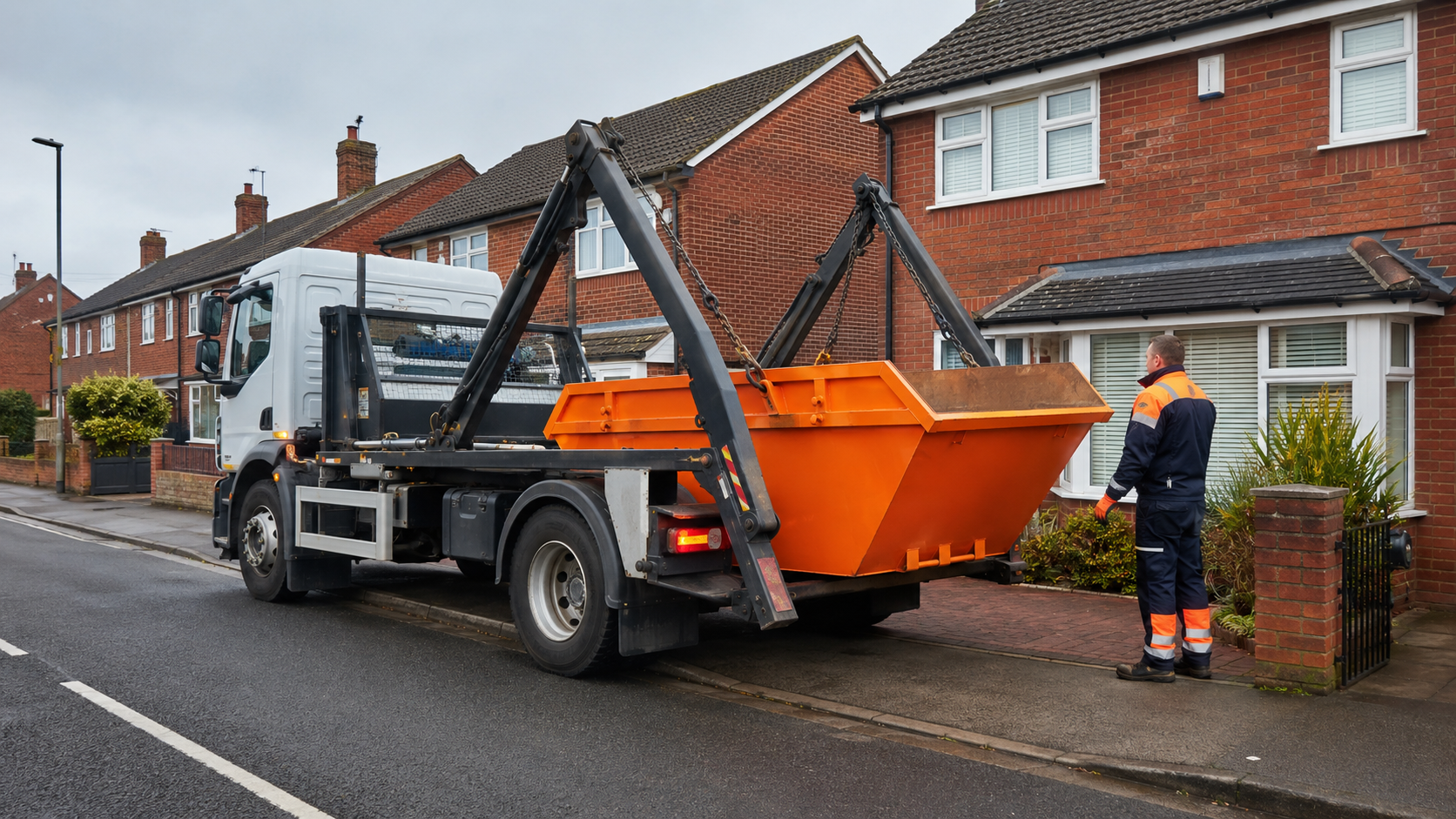
Usually accepted in a general skip
- ✓Household clear-out waste
- ✓Wood and empty cupboards
- ✓Garden cuttings and branches
- ✓Bricks, rubble and concrete
- ✓Metal, plastic and cardboard
- ✓Tiles and bathroom fittings
Restricted items
Do not add asbestos, batteries, gas bottles, oils, paint, solvents, chemicals, tyres, fluorescent tubes, medical waste, fridges or freezers to an ordinary mixed skip. Ask about a specialist route instead.
Soils, bricks and concrete
Dense waste is often accepted in a suitable skip, but weight limits matter. Explain the approximate amount before booking. Plasterboard may need to stay separate depending on the collection arrangement.
Sofas, armchairs and other upholstered seating
Waste upholstered domestic seating may contain persistent organic pollutants (POPs). It must not be mixed with other skip waste unless a compliant route has been agreed. Keep the item whole and ask for a separate collection plan.
Businesses have extra paperwork
Businesses must store waste safely, use an authorised carrier and complete the required waste transfer information. Keep records for the required period.
GOV.UK: dispose of business or commercial waste ↗Clear the job.
Keep the plan simple.
Tell us what you are clearing, where you are and when you need the skip.
Request my skip quote →